

Blog
A WATCH COLLECTION DESERVES MORE THAN A DISPLAY—IT DESERVES A RECORD

⌚ A WATCH COLLECTION DESERVES MORE THAN A DISPLAY—IT DESERVES A RECORD
Collectors often spend years choosing watches, yet the story behind each piece can gradually disappear.
The purchase date gets forgotten. A service receipt is misplaced. The original accessories are separated from the watch. A family member inherits a meaningful timepiece but never learns why it mattered.
A well-maintained collection therefore needs two systems: one that looks after the watches and another that preserves their history.
📖 WHAT IS A WATCH PROVENANCE RECORD?
A provenance record is an organized history of a watch. It connects the physical timepiece with the documents, photographs and personal information that explain where it came from and how it has been cared for.
This practice is useful for rare watches, but it is not reserved for museum-level pieces. A first mechanical watch, a graduation gift, a retirement watch or an heirloom from a parent may carry a story whose personal value greatly exceeds its market price.
Creating a record now makes that story easier to understand years from today.
🗂️ BEGIN WITH A WATCH IDENTITY PAGE
Give every watch in the collection its own page—digital or printed.
Record the brand, model, reference number, purchase date and original seller. Add the case material, dial color, bracelet or strap type, and any distinguishing details that will help identify the piece later.
Serial numbers can also be documented, but they should be stored privately. Avoid displaying complete serial numbers in public photographs or social posts.
A clear identity page prevents similar models from becoming confused and gives every future document a logical place to belong.
🧾 KEEP THE DOCUMENTS THAT ESTABLISH CONTEXT
Original receipts, warranty cards, certificates, instruction manuals and appraisal documents can all contribute to the history of a watch.
Make a simple inventory of what accompanied the timepiece when it was purchased:
⌚ Original box
📄 Warranty card or certificate
📘 User manual
🔗 Spare bracelet links
🧰 Adjustment tools or accessories
🧾 Purchase and service receipts
If physical paperwork must be stored elsewhere, a scanned copy can be added to the digital record. Use consistent filenames so that the correct documents remain connected to the correct watch.
🔧 BUILD A SERVICE TIMELINE
A service record should explain more than when a watch entered a workshop.
Note the service provider, date, work performed and components replaced. If the watch received a water-resistance test, accuracy measurement or pressure test, retain those results as well.
This timeline helps an owner understand what has already been addressed and makes future conversations with a qualified watchmaker more productive.
A watch winder does not replace professional servicing, lubrication checks or condition inspections. Its role is different: it provides controlled rotation for compatible automatic watches between wearing occasions.
📷 CREATE A CONSISTENT PHOTO RECORD
Photographs can document condition in a way that written notes cannot.
For every watch, photograph the dial, caseback, crown side, opposite case side, clasp and bracelet. Use neutral lighting and repeat the same angles whenever the record is updated.
These images can help track scratches, strap wear and other visible changes. They may also support insurance documentation or clarify a watch’s condition before and after servicing.
For privacy, review photographs carefully before sharing them online. Reflections, paperwork and exposed serial numbers may reveal more information than intended.
🛡️ BACK UP THE ARCHIVE
A single folder on one computer is not a complete archive.
Keep at least one additional protected copy of important records. Sensitive information should be secured appropriately, while physical documents should be kept away from moisture, excessive heat and direct sunlight.
Review insurance values periodically, because an old appraisal may no longer reflect the current replacement cost. Requirements differ among insurers, so confirm which photographs and documents your provider expects.
✍️ RECORD THE PART THAT CANNOT BE REPLACED
The most meaningful entry may not be technical at all.
Write down why the watch was chosen. Record the milestone it celebrated, the journey on which it was worn or the person who originally owned it. If the piece may eventually be passed to someone else, include a short note intended for that future owner.
Reference numbers describe a watch. Stories explain why it belongs in the family.
🔄 CONNECT THE RECORD WITH THE PHYSICAL COLLECTION
A practical quarterly review can keep both the watches and their records organized:
✨ Match each watch to its identity page
✨ Confirm that boxes and accessories remain correctly assigned
✨ Add recent service documents and photographs
✨ Review insurance information
✨ Update personal notes after an important occasion
✨ Check that the physical display remains clean and orderly
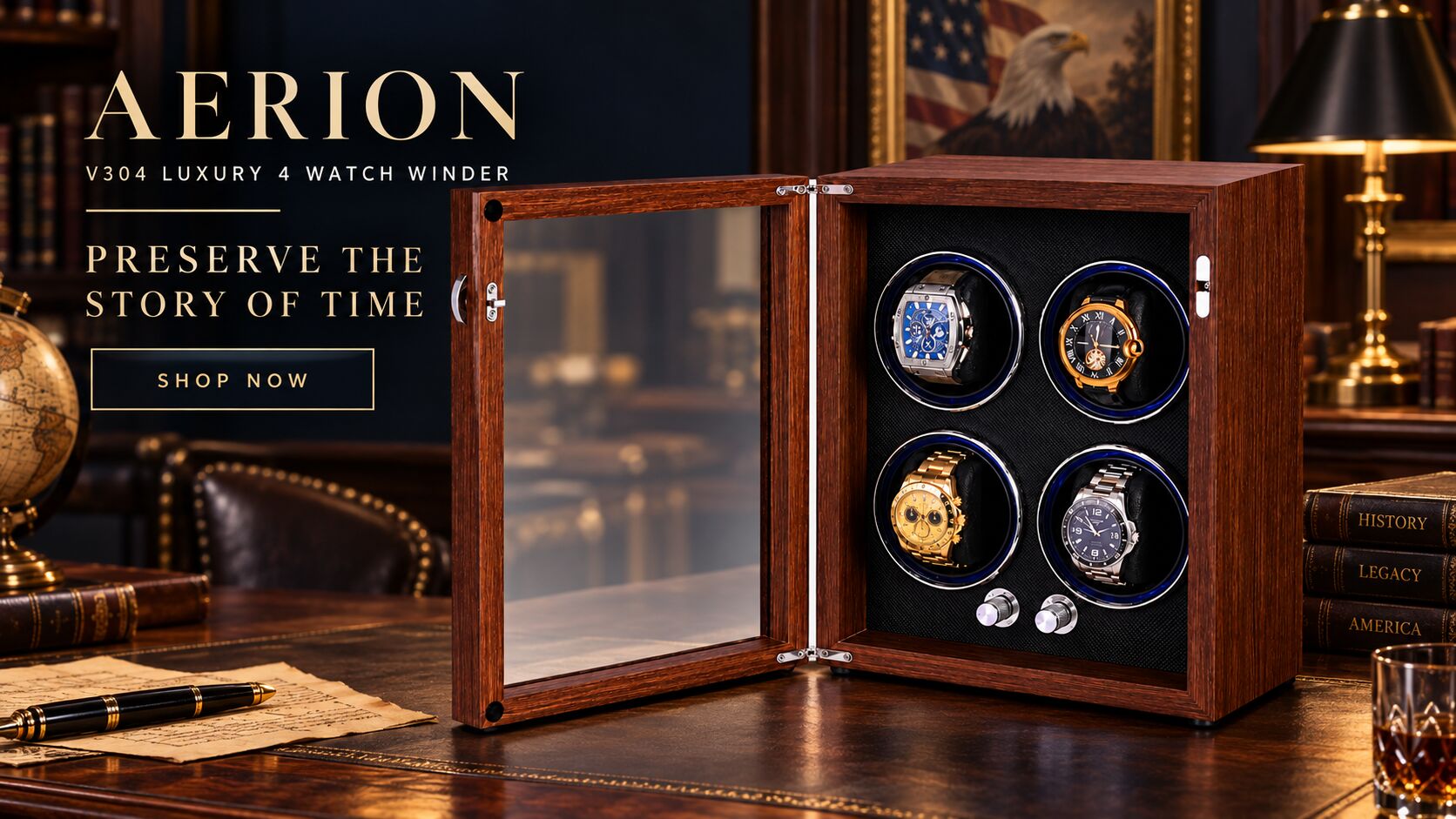
For a focused four-watch collection, the Aerion AW‑V304 creates a defined home for the pieces included in that routine.
Its upright walnut-finish cabinet presents four individual winding positions in a compact tower format. Blue LED illumination highlights each watch, while the black TPE interior provides a composed backdrop. Four adjustable rotation modes include clockwise, counterclockwise and alternating operation, allowing owners to consult each watch manufacturer’s recommendations before choosing an appropriate setting.
A Japanese Mabuchi motor supports quiet operation, and the included USB Type‑C cable provides a streamlined power connection. A compatible power adapter or plug is required and is not included.
⌚ The winder organizes the physical collection.
📖 The archive preserves its history.
Together, they encourage a more deliberate form of ownership—one that respects how a watch operates, how it is presented and what it may represent to the next generation.
🛒 SHOP NOW:
https://aerionwinders.com/product/aerion-v304-luxury-4-watch-winder-tower/