

Blog
How to Choose the Right Watch Winder for Your Automatic Watches

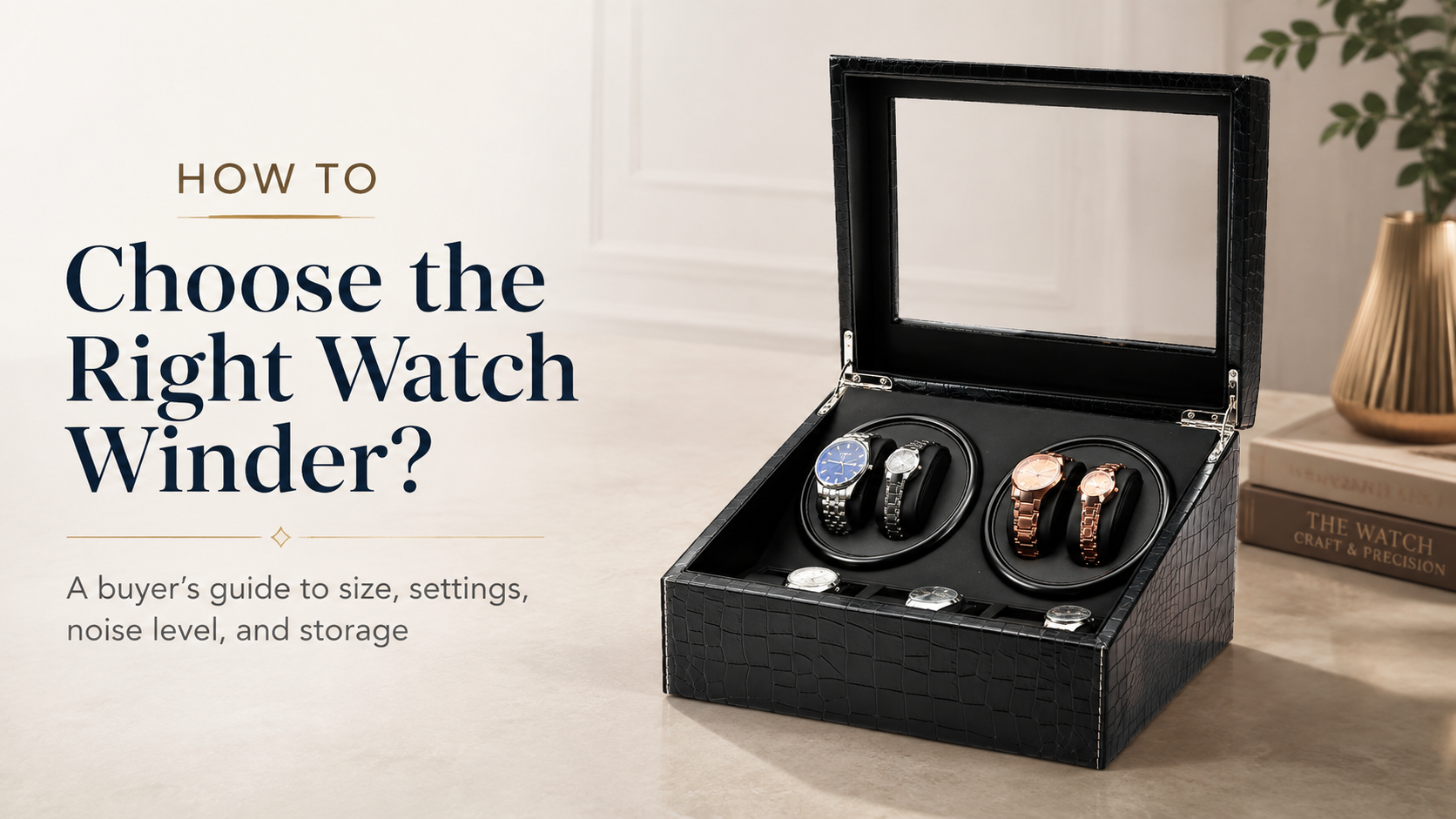
If you own an automatic watch, you know the frustration of picking it up after a few days only to find it has stopped ticking. Automatic watches rely on the natural motion of your wrist to stay wound and keep accurate time. A high-quality watch winder is the perfect solution to keep your collection ready to wear. But with so many options on the market, how do you choose the right watch winder?
Here is a comprehensive guide to finding the perfect match for your timepiece.
1. Know Your Watch’s TPD (Turns Per Day)
The most critical factor in selecting a winder is the Turns Per Day (TPD). Every automatic watch requires a specific number of rotations to remain fully wound without putting unnecessary strain on the mainspring. Most standard automatic movements require between 650 and 900 TPD. When shopping, ensure the winder you select offers adjustable TPD settings so you can match it to your specific caliber’s exact specifications.
2. Match the Rotation Direction
Automatic movements wind in different directions. Some wind clockwise, others counter-clockwise, and many require bidirectional rotation. If you place a clockwise-winding watch in a counter-clockwise winder, it simply will not charge. The best watch winders offer programmable directional settings, giving you the flexibility to house different watches over time without worrying about compatibility.
3. Consider Your Collection Size
Are you looking to maintain a single everyday watch, or do you have a growing collection?
-
Single watch winders: Ideal for beginners or collectors who alternate between just two primary watches.
-
Multi-watch winders: If you own three or more automatic timepieces, investing in a multi-winder saves space and limits power cord clutter. Ensure that each rotor in a multi-winder can be programmed independently, as different watches will inevitably have different TPD and directional needs.
4. Prioritize Motor Quality and Noise
A watch winder is often placed in a bedroom, quiet office, or safe. Because of this, the acoustic footprint matters immensely. Look for winders equipped with Japanese Mabuchi motors or equivalent premium mechanisms. These motors are renowned for being ultra-quiet, durable, and highly energy-efficient. You want to hear the gentle ticking of your watch, not the grinding of a cheap, overworked motor.
5. Design and Security
Beyond pure functionality, a winder is a display piece. Whether you prefer modern carbon fiber, classic wood finishes, or sleek leather, choose a design that complements your interior space. Additionally, if you are storing high-value pieces, consider a winder with a built-in lock or one compact enough to fit inside a standard home safe.
Final Thoughts
Choosing the right watch winder comes down to understanding your watch’s specific mechanical needs and your personal lifestyle. By focusing on customizable TPD, independent directional settings, and a whisper-quiet motor, you can ensure your automatic watches remain in pristine condition. Whether you are outfitting a single heirloom or curating a luxury collection for a dedicated space like Aerion Winders, the right equipment is an investment in the longevity of your timepieces.